


Signs Aging Parents Need Help During the Holidays | South OC
For many families, November and December are the only times of year when everyone gathers under one roof for more than a few hours at a time. Whether you are flying in from out of state to visit your parents in Dana Point, driving down to Laguna Niguel, or spending Thanksgiving afternoon at your family home in Irvine or Lake Forest, the holidays offer a rare window into how your loved ones are managing day to day.
Phone calls and FaceTime chats make it easy for proud parents to say, “We’re doing just fine!” Even during short weekend visits, seniors can often muster the energy to mask physical fatigue or memory slips for a couple of hours.
When you stay for a full day or a long holiday weekend, however, the everyday reality becomes much clearer. If you are visiting aging parents this season, here is a holiday checklist for aging parents: seven subtle signs that may point to a need for elderly care during the holidays, and how to approach the next steps with compassion.
1. The Fridge and Pantry Tell a Different Story
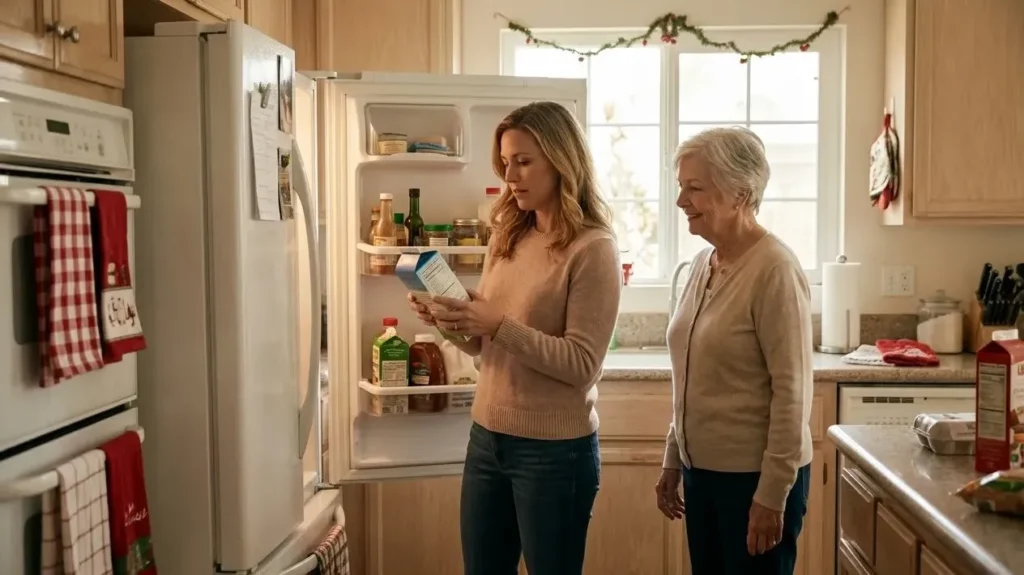
When preparing holiday meals or grabbing a glass of water in the kitchen, take a quiet look inside the refrigerator and pantry. Changes in eating habits are often the very first indicator that daily tasks have become overwhelming.
What to look for: Expired condiments and dairy products, moldy produce, multiple duplicate purchases of the exact same item, or a freezer stocked almost entirely with high-sodium frozen dinners. Also check the stove and cookware—scorched pots or burned dish towels can point to distracted cooking.
What it could mean: Standing at the stove may have become physically exhausting, driving to the grocery store may feel unsafe, or early cognitive changes may be making multi-step recipes and food safety harder to track.
How home care helps: Through professional homemaking services, a caregiver can assist with grocery shopping, meal planning, fresh meal preparation, and kitchen organization—ensuring your parents enjoy nutritious meals safely.
2. Unexplained Weight Loss or Dehydration
A warm holiday hug can sometimes reveal what loose clothing hides: your mom or dad feels noticeably frailer or lighter than they did a few months ago.
What to look for: Loose-fitting clothes, rings or watches slipping off their wrists, dry skin, chapped lips, or low energy in the afternoon.
What it could mean: Beyond difficulty cooking, weight loss can stem from medication side effects, dental discomfort, depression, or forgetting whether they have eaten lunch.
How home care helps: Consistent hourly home care ensures someone is there during key meal times to prepare appetizing food, offer hydration reminders, and share conversation at the table so your parent isn’t eating alone.
3. "Furniture Surfing" and Subtle Mobility Changes

Seniors rarely announce that they are afraid of falling—or that they have already had a close call. Instead, they subconsciously adapt how they move through their home.
What to look for: Watch how your parent moves from the living room to the kitchen. Do they reach for the back of the sofa, hallway walls, or kitchen counters to steady themselves (“furniture surfing”)? Do they struggle to push up from a low armchair, or avoid going upstairs in a two-story home in Ladera Ranch or Mission Viejo? Look for unexplained bruises on their forearms or shins as well.
What it could mean: Decreased lower-body strength, balance issues, neuropathy, or vision changes are dramatically increasing their risk of a serious fall.
How home care helps: Proactive fall risk assessment and prevention combined with hands-on mobility and physical support helps seniors transfer safely from beds and chairs, navigate stairs, and stay active without risking an injury.
4. Clutter, Unopened Mail, and Neglected Household Upkeep
If your parent has always kept a tidy home or a well-tended patio and you suddenly notice clutter piling up, resist the urge to chalk it up to laziness.
What to look for: Stacks of unopened mail, late payment notices or shut-off warnings mixed in with junk mail, overflowing laundry baskets, dusty bathrooms, or scorched/neglected yard areas.
What it could mean: Bending, lifting, and scrubbing may cause back or joint pain, while sorting through bills and insurance paperwork can quickly overwhelm a senior experiencing mild cognitive decline.
How home care helps: Light housekeeping, laundry assistance, and mail sorting help restore order and safety to the home while taking the physical strain off your loved one.
5. Changes in Personal Hygiene and Wardrobe
Changes in grooming habits are deeply sensitive for aging adults, often because the bathroom is the most dangerous room in the house.
What to look for: Wearing the same outfit several days in a row, unwashed or uncombed hair, body odor, untrimmed nails, or avoiding the shower altogether.
What it could mean: Stepping over a tub ledge or standing on wet tile can feel terrifying when balance starts to slip. Arthritic fingers can also make buttons, zippers, and shoelaces frustrating to manage.
How home care helps: Dignified, respectful personal care provides steady assistance with bathing, showering, grooming, and dressing—preserving your parent’s independence while keeping them safe on slippery surfaces.
6. Medication Confusion or Missed Doses
Managing five or ten different prescriptions—some taken with food, some on an empty stomach, some twice a day—is challenging at any age.
What to look for: Pill bottles with expired dates, prescriptions that remain completely full weeks after they were filled, loose pills on the counter, or an disorganized weekly pill organizer.
What it could mean: Missed blood pressure, heart, or diabetes medications are one of the leading causes of preventable emergency room visits for older adults.
How home care helps: While non-medical caregivers do not administer medications, they provide reliable daily medication reminders, help track schedules, and offer chronic condition support to keep routines on track.
7. Holiday Overwhelm, Withdrawal, or Evening Confusion ("Sundowning")
Big family gatherings come with cross-talk, background music, children running through the house, and disrupted schedules. For a senior experiencing early cognitive changes, that environment can feel exhausting.
What to look for: Your parent retreating to a quiet room during dinner, repeating the same stories or questions within a 15-minute span, struggling to follow group conversations, or becoming noticeably more anxious, irritable, or confused once the sun goes down.
What it could mean: Early-stage dementia or Alzheimer’s often shows up most clearly when familiar routines are disrupted or during the late afternoon and evening hours (known as “sundowning”). You may also notice the primary spouse caregiver looking completely exhausted from covering for their partner.
How home care helps: Specialized memory and cognitive care provides calm, structured 1-on-1 engagement, while respite care gives an overwhelmed spouse or family caregiver the breathing room they need to rest and enjoy the holidays too.
How to Start the Conversation (Without Ruining Thanksgiving)

Unless there is an immediate medical or safety emergency, the middle of Thanksgiving dinner is not the time to confront your parents about their decline. Instead, take a collaborative, empathetic approach:
1. Observe and Take Notes Privately
Compare observations quietly with your siblings over the weekend so everyone is on the same page before bringing up concerns.
2. Focus on Preserving Their Independence
Frame support around “How can we make life easier?” rather than “You can’t do this anymore.” Offering help with heavy laundry, grocery shopping, or meal prep feels collaborative and empowers them to stay in the home they love.
3. Start Small with a Few Hours a Week
Many families in South Orange County begin with just a few hours of companionship or homemaking each week. Once your parent builds trust with a caregiver, expanding care becomes smooth and natural.
4. Build a Local Safety Net Before You Fly Home
If you live out of town, coordinating care from afar can feel daunting. Our dedicated guide for long-distance family members walks you through how we keep adult children updated and connected no matter where you live.
Need Peace of Mind This Holiday Season? Let's Talk.
At Assisting Hands® Irvine & Dana Point, we provide trusted home care in Dana Point and South Orange County home care across Dana Point, San Juan Capistrano, San Clemente, Laguna Niguel, Lake Forest, Irvine, and surrounding South Orange County communities, helping families access reliable in-home care Orange County seniors can count on, including senior fall risk prevention support, so loved ones thrive safely and comfortably at home.
Whether your family needs a few hours of weekly help, overnight care, or comprehensive 24-hour care, our compassionate team can meet with you and your loved ones while you are in town for the holidays.
Call us 24/7 at (949) 426-7300 or schedule a free in-home consultation online today.