Assisting Hands® Irvine & Dana Point


Compassionate Neurological Home Care Support
Neurological Care at Home
Compassionate, Non-Medical Home Care for Individuals Living with Neurological Conditions
A neurological diagnosis can change nearly every aspect of daily life, not only for the person receiving care, but also for spouses, adult children, and other family members. Whether the condition develops gradually over many years or occurs suddenly after a medical event, many individuals eventually need additional assistance to remain safe, comfortable, and independent at home.
At Assisting Hands® Irvine & Dana Point, we provide compassionate, non-medical home care for individuals living with neurological conditions. Our caregivers help clients maintain the highest possible quality of life by providing personalized assistance with daily activities while promoting dignity, independence, and meaningful engagement.
Every care plan is customized to the individual’s abilities, personal preferences, physician recommendations, and family goals. As care needs change over time, we adjust our services to continue providing the right level of support.
What Is Neurological Care?

Neurological care refers to supportive services for individuals whose brain, spinal cord, or nervous system has been affected by disease, injury, or a neurological disorder. These conditions often impact mobility, coordination, balance, speech, strength, memory, cognition, sensation, or the ability to perform everyday tasks independently.
While medical providers focus on diagnosis, treatment, therapy, and medications, our role is to provide the non-medical assistance that helps clients continue living safely and comfortably at home.
Our caregivers work alongside families, physicians, therapists, home health providers, hospice teams, and other healthcare professionals to provide continuity of care between medical visits.
Neurological Conditions We Support
Our caregivers support individuals living with a wide range of neurological diagnoses. Every care plan is built around the person, not the condition.
Parkinson’s Disease Care
Parkinson’s disease is a progressive neurological disorder that affects movement, balance, muscle control, and coordination. As symptoms progress, everyday tasks that were once routine can become increasingly difficult.
Our caregivers understand the importance of maintaining routines, encouraging safe mobility, and providing patient, compassionate support.
As Parkinson’s progresses, we adjust the care plan to accommodate changing mobility, increased fall risk, fatigue, freezing episodes, and greater assistance with activities of daily living.
Stroke Recovery Care
Every stroke recovery journey is different. Some individuals recover quickly, while others experience long-term physical or cognitive challenges that require ongoing support.
Following a stroke, clients may experience:
- Weakness on one side of the body
- Limited mobility
- Balance problems
- Difficulty speaking
- Fatigue
- Memory challenges
- Reduced coordination
- Increased fall risk
Our caregivers help clients safely navigate daily life while encouraging independence whenever possible. Our goal is to complement rehabilitation efforts by helping clients remain active, engaged, and safe at home.
Select the Care You Need

Personal Care
Our tailored personal care is designed to assist seniors with hygiene, incontinence care, mobility support, and much more.

Personal Care Support Services
Homemaking services help seniors take care of the practical aspects of daily life, allowing them to enjoy clean, organized, and comfortable homes.

Companionship
Personalized companion care for seniors fosters meaningful relationships and provides a comforting presence that alleviates loneliness.

Respite Care
Respite care offers temporary relief to family caregivers to prevent burnout while ensuring high-quality care for their senior loved ones.
Select the Care You Need
Personal Care
Our tailored personal care is designed to assist seniors with hygiene, incontinence care, mobility support, and much more.
Personal Care Support Services
Homemaking services help seniors take care of the practical aspects of daily life, allowing them to enjoy clean, organized, and comfortable homes.
Companionship
Personalized companion care for seniors fosters meaningful relationships and provides a comforting presence that alleviates loneliness.

Respite Care
Respite care offers temporary relief to family caregivers to prevent burnout while ensuring high-quality care for their senior loved ones.
Multiple Sclerosis (MS) Care
Multiple Sclerosis (MS) is a chronic neurological disease that affects communication between the brain and the body. Symptoms often vary from person to person and may fluctuate over time.
Individuals living with MS may experience:
- Muscle weakness
- Fatigue
- Balance difficulties
- Vision changes
- Limited mobility
- Tremors
- Numbness
- Heat sensitivity
- Difficulty with coordination
Because MS symptoms can change from day to day, our caregivers provide flexible care that adapts to the client’s current condition. We focus on helping clients remain as independent as possible while reducing physical strain and improving daily comfort.
ALS (Lou Gehrig’s Disease) Care
Amyotrophic Lateral Sclerosis (ALS) is a progressive neurological disease that affects voluntary muscle movement. As the disease advances, individuals often require increasing levels of assistance with daily activities while maintaining their desire for independence and personal dignity.
Although our caregivers do not provide medical treatment, we play an important role in supporting clients throughout disease progression. Our caregivers work closely with family members and healthcare professionals to help clients remain comfortable and supported in familiar surroundings.
Paralysis Care
Individuals living with paraplegia, quadriplegia, or other forms of paralysis often require assistance with many activities of daily living while striving to maintain independence and an active lifestyle.
Each person’s needs are unique depending on the cause and extent of paralysis. We understand the importance of promoting independence wherever possible while helping reduce the physical demands placed on family caregivers.
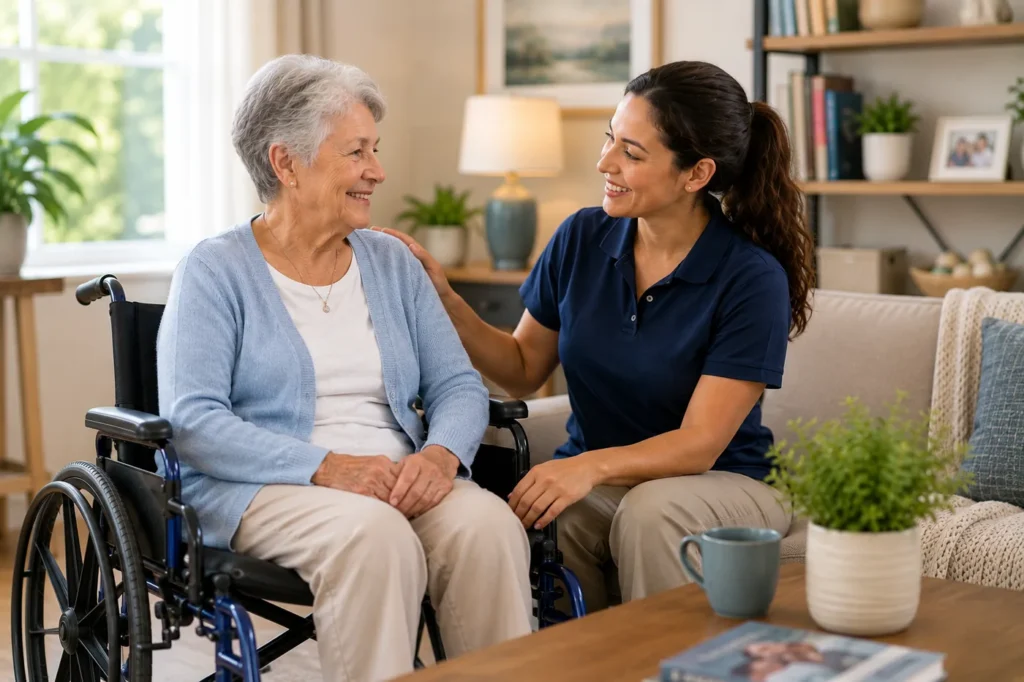
Our Neurological Home Care Services May Include
- Personal care assistance, including bathing, dressing, grooming, and personal hygiene
- Toileting and continence assistance
- Walking, ambulation, and general mobility assistance
- Safe transfers, including bed-to-chair and wheelchair transfers
- Wheelchair assistance and mobility support
- Positioning, repositioning, and comfort measures
- Fall prevention and home safety support
- Skin integrity support through regular repositioning
- Meal planning, meal preparation, and feeding assistance when needed
- Medication reminders
- Transportation to physician appointments, therapy sessions, treatments, and community activities
- Light housekeeping and household assistance
- Laundry, errands, and other daily household tasks
- Exercise encouragement and assistance with prescribed home exercise programs, as directed by healthcare professionals
- Assistance maintaining daily routines and promoting independence
- Energy conservation strategies to reduce fatigue during daily activities
- Cognitive engagement and meaningful activities that promote mental stimulation
- Friendly companionship and emotional support
- Assistance during periods of symptom progression, flare-ups, or changing care needs
- Family caregiver respite and relief to help reduce caregiver stress
Personalized Care That Evolves with Changing Needs
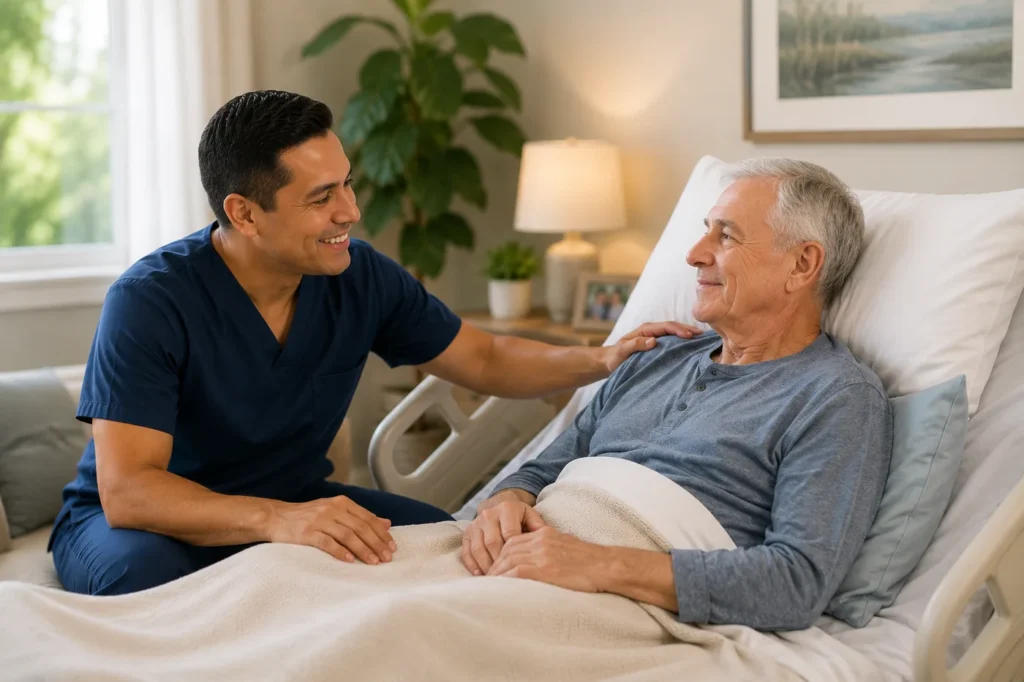
We regularly communicate with clients and their families to ensure care plans continue to reflect current needs and goals. As changes occur, we can help increase care by providing:
- Additional daily assistance
- Longer care shifts
- Overnight care
- 24-hour care
- Live-in care (when appropriate)
- Respite care for family caregivers
- Post-hospital support after setbacks or complications
Supporting the Entire Family
Neurological conditions affect more than just the individual living with the diagnosis. Family members often become caregivers themselves while balancing careers, children, and other responsibilities.
Our caregivers provide reliable support that helps reduce caregiver burnout and gives families greater peace of mind.
Whether assistance is needed a few hours each week or around the clock, we help families feel confident knowing their loved one is receiving compassionate, dependable care.
Why Families Choose Assisting Hands® Home Care
Families throughout South Orange County trust Assisting Hands® because we understand that neurological conditions require more than simply helping with physical tasks.
Our caregivers focus on building meaningful relationships while delivering compassionate, respectful care that preserves dignity and independence. We are committed to:
- Personalized care plans
- Carefully selected caregivers
- Flexible scheduling
- Consistent communication
- Reliable, dependable service
- Respectful, compassionate care
- Supporting independence whenever safely possible
Our goal is to help every client continue living safely and comfortably in the place they know and love most — their own home.
Schedule Your Complimentary In-Home Care Consultation
If you or someone you love is living with Parkinson’s disease, recovering from a stroke, managing Multiple Sclerosis, living with ALS, or adapting to paralysis, Assisting Hands® Irvine & Dana Point is here to help.
We will meet with you, learn about your unique situation, answer your questions, and develop a personalized care plan that supports your goals, promotes independence, and provides peace of mind for your entire family.
Contact us today to schedule your complimentary in-home care consultation and discover how compassionate neurological home care can make everyday life safer, easier, and more comfortable.