


Understanding Respite Care: Clear, Practical Relief for Family Caregivers
Caring for someone you love brings deep reward — and real strain. Many family caregivers juggle physical tasks, emotional concern, and constant mental load that can lead to stress and burnout. This guide explains respite care: a short-term, trusted solution that gives caregivers time to rest, run errands, or simply recharge. When you understand how respite care works and the benefits it offers, you can make clearer choices for your family. Below we define respite care, outline its main benefits, describe how Assisting Hands® Irvine & Dana Point delivers personalized in‑home respite, review who qualifies, list local resources, and offer tips to get the most from respite services.
What is respite care, and how does it support family caregivers?
Respite care provides planned, temporary relief so family caregivers can step away from daily responsibilities without leaving their loved one unsupported. It can happen at home, at adult day centers, or in residential settings. The main aim is simple: reduce caregiver stress and lower the chance of burnout so the quality of care — and family life — improves.
Defining in‑home respite care services for seniors
In‑home respite means trained caregivers come to the home to help with everyday needs — personal care, meal prep, mobility assistance, and companionship. This lets family caregivers take time off while the person they care for stays comfortable in a familiar place. In‑home respite is especially helpful for seniors with chronic conditions or disabilities, because the support can be tailored to each person’s routine and preferences.
How temporary senior care provides caregiver relief

Temporary care can be as short as a few hours or as long as several days. Options include short stays in assisted living or scheduled in‑home visits. These breaks let caregivers handle appointments, rest, or reconnect with friends — all with the confidence that their loved one is safe and supported. Regularly using temporary care can ease tension at home and strengthen family relationships.
Unlocking the Benefits of Respite Care for Family Caregivers
Respite care delivers practical benefits that protect caregivers’ health and relationships. Knowing these advantages helps families choose the right support at the right time.
- Mental health improvements: Breaks help reduce anxiety and depressive symptoms. Time away makes room for rest, therapy, or simply doing things that restore energy.
- Physical health benefits: Caregiving can be physically demanding. Regular respite helps prevent exhaustion and reduces the risk of injury or illness from overwork.
- Social benefits: Time off lets caregivers reconnect with friends and family. Meanwhile, seniors gain social interaction with other caregivers or program participants, which can lessen isolation.
If you want personalized in‑home respite, Assisting Hands® Irvine & Dana Point focuses on compassionate, reliable care that fits each family’s routine. Our caregivers are trained to meet seniors where they are, so families can take the breaks they need with peace of mind.
How does Assisting Hands® provide personalized in‑home respite care?
Assisting Hands® offers flexible, family‑focused respite plans. We design services around each household’s needs and adjust as those needs change — so you get support that actually fits your life.
Flexible care plans tailored to family needs in Orange County, CA
We work directly with families to build flexible care plans that might include personal care, meal help, medication reminders, and companionship. Plans are practical and adaptable, created to match the senior’s abilities and the caregiver’s schedule.
Scheduling consultations for customized care solutions
Booking a consultation is the first step: we’ll talk through your concerns, explain available services, and recommend a plan that meets your goals. These conversations help families feel secure about using respite care and confident in the decisions they make.
Who qualifies for respite care and how can families access these services?
Different programs have different rules, but many families can access respite care when a senior needs day‑to‑day help. Below are typical guidelines and a simple way to get started.
Eligibility criteria for family caregiver assistance programs
Eligibility usually depends on the senior’s functional needs — whether they need help with bathing, dressing, mobility, or other daily tasks — and on the caregiver’s need for temporary relief. Programs vary, so it’s helpful to check with local providers or agencies to learn specific requirements.
Step‑by‑step guide to scheduling in‑home respite care
- Assess needs: Identify the senior’s care needs and the caregiver’s availability and goals.
- Research options: Look for local respite providers, including Assisting Hands® Irvine & Dana Point, and compare services and availability.
- Schedule a consultation: Talk with a care advisor to review options and any costs or funding available.
- Develop a care plan: Agree on a tailored schedule, tasks, and caregiver match that suit your household.
- Begin care: Start respite services and check in regularly to ensure the plan is working for everyone.
What local Orange County resources enhance respite care benefits for caregivers?
Beyond in‑home services, Orange County has community programs and supports that can make respite more effective and affordable.
Community support networks for family caregivers in Orange County

Local support networks offer group meetings, educational workshops, and referrals to services that help caregivers manage day‑to‑day challenges. Connecting with these groups provides practical tips and emotional support from people who understand the role firsthand.
Additional mental health and caregiver relief services available locally
Orange County, CA also provides counseling, stress‑management programs, and sometimes grants or vouchers to offset respite costs. Exploring these options can make regular breaks more accessible and improve overall caregiver well‑being.
How can families monitor and maximize the effectiveness of respite care?
To get the most from respite, stay engaged with the care process and make adjustments as needs change.
Recognizing signs of caregiver stress and when to seek help
Watch for ongoing fatigue, increased irritability, withdrawal from friends or activities, or difficulty concentrating. If these signs appear, it’s a clear signal to add respite or seek additional support before stress becomes overwhelming.
Using feedback and consultations to optimize care plans
Regular check‑ins with your provider help fine‑tune schedules, tasks, and caregiver matches. Honest feedback ensures the care plan stays effective and that both the senior and the caregiver feel safe and supported.
| Benefit | Description | Impact Level |
|---|---|---|
| Mental Health Improvements | Planned breaks reduce anxiety and depressive symptoms for caregivers. | High |
| Physical Health Benefits | Regular respite helps caregivers recover physically and avoid injury from overexertion. | High |
| Social Benefits | Respite encourages social engagement for both caregivers and seniors, easing isolation. | Medium |
Respite care is a practical, important tool for family caregivers. By knowing the benefits, tapping local supports, and staying involved in care planning, families can protect their health and ensure better long‑term care for loved ones.
Frequently Asked Questions
What types of respite care services are available for family caregivers?
Respite comes in several forms to fit different needs: in‑home care, where trained professionals provide hands‑on help; adult day programs that offer structured social activities and supervision during the day; and short‑term stays in assisted living or other residential settings. Each option is meant to give caregivers a reliable break while their loved one receives appropriate care.
How can respite care improve the quality of life for seniors?
Respite care gives seniors focused attention, assistance with daily tasks, and chances to socialize — all of which support emotional well‑being. When caregivers are less stressed and more rested, the overall home environment improves, and seniors benefit from steadier, more patient care.
Are there financial assistance options for accessing respite care?
Yes. Some state and local programs offer grants, vouchers, or subsidies to help cover respite costs, and a few nonprofits provide targeted financial support for caregivers. It’s worth asking providers and local aging agencies about available funding and eligibility rules.
How can caregivers find local respite care providers?
Start with online searches and local directories, then contact community centers, hospitals, or senior service organizations for recommendations. Personal referrals from friends or support groups are also valuable. Schedule consultations to compare providers and find the best fit.
What should families consider when choosing a respite care provider?
Look at qualifications, experience, and the range of services offered. Ask about caregiver screening and training, scheduling flexibility, and how well the caregiver’s style matches your loved one. Reading reviews and requesting references can help confirm the provider’s reliability.
How often should caregivers utilize respite care services?
There’s no one‑size‑fits‑all answer. Brief, regular breaks can prevent burnout, while some families may need longer or more frequent respite depending on health and circumstances. Many experts suggest at least monthly breaks, but follow your own stress signals and use respite as needed.
What are some signs that a caregiver may need respite care?
Key signs include persistent tiredness, increased irritability, social withdrawal, trouble focusing, or neglecting personal health. If caregiving is affecting your sleep, relationships, or work, it’s time to arrange respite and get support.
Conclusion
Respite care is an essential resource for family caregivers — it reduces stress, protects physical and mental health, and helps families maintain a higher quality of care. Taking planned breaks benefits everyone involved. To learn how Assisting Hands® Irvine & Dana Point can support your caregiving journey with compassionate, personalized in‑home respite, contact us to discuss options that fit your family.
Join Our Team of Caregivers
Our expansion means we’re actively hiring compassionate, reliable caregivers throughout South Orange County. If you have experience in home care, senior care, or healthcare and want to make a meaningful difference in people’s lives, we’d love to hear from you.
We offer competitive pay, flexible scheduling, ongoing training, and the support of a team that values your work. Apply to become a caregiver today.
Schedule Your Free Consultation
If you’re exploring home care options for a loved one in Irvine, Lake Forest, or anywhere in South Orange County, we’d welcome the opportunity to learn about your situation. Every family’s circumstances are different, and there’s no pressure—just honest conversation about what might help.
Call us at (949) 426-7300 or schedule your free in-home consultation online. During this meeting, we’ll discuss your loved one’s needs, answer your questions, and explain how our services work. If we’re the right fit, we’ll develop a customized care plan together.
Quality home care makes it possible for seniors to age with dignity, independence, and support—right where they want to be. We’re honored to now offer that possibility to even more Orange County families.
Serving All of South and Central Orange County
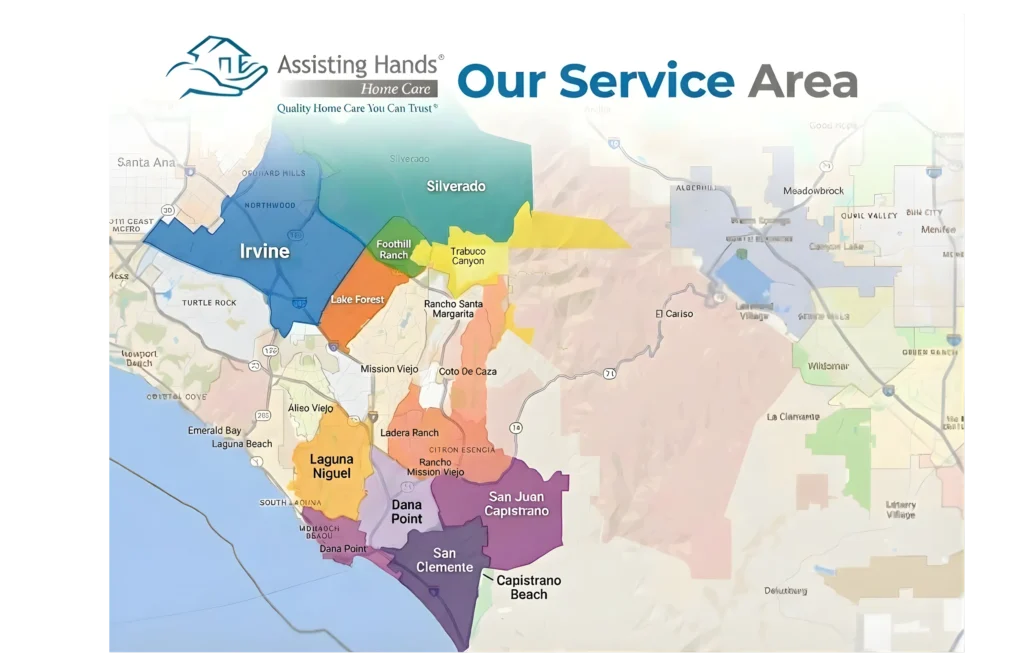
Assisting Hands® Irvine & Dana Point now proudly serves families throughout Orange County, including:
- Dana Point
- San Juan Capistrano
- San Clemente
- Laguna Niguel
- Laguna Hills
- Aliso Viejo
- Rancho Mission Viejo
- Mission Viejo
- Rancho Santa Margarita
- Coto de Caza
- Trabuco Canyon
- Foothill Ranch
- Silverado
- Ladera Ranch
- Irvine (NEW)
- Lake Forest (NEW)
From coastal communities to the canyons and foothills, our caregivers travel throughout the region to provide consistent, professional home care services.